You went for a routine physical exam expecting a straightforward health check, but your blood pressure reading was higher than expected. Does this mean you have hypertension, or could it be a temporary change?
An elevated reading during a physical exam deserves attention, but one measurement does not always mean you have high blood pressure. Blood pressure can fluctuate throughout the day, and healthcare providers consider multiple readings, medical history and other factors before making a diagnosis.
For patients around New Hyde Park, Garden City, Floral Park and Queens Village, understanding what happens after an unexpected blood pressure reading can help make the next steps clearer.
Does One High Blood Pressure Reading Mean You Have Hypertension?
Not necessarily.
Blood pressure measures the force of blood against your artery walls. It is recorded using two numbers: systolic pressure, when your heart beats, and diastolic pressure, when your heart relaxes between beats.
According to the American Heart Association, blood pressure readings are classified into four main categories:
Normal Blood Pressure: A reading below 120/80 mmHg is considered normal.
Elevated Blood Pressure: A systolic reading between 120 and 129 mmHg, with a diastolic reading below 80 mmHg, is considered elevated.
Stage 1 Hypertension: A systolic reading between 130 and 139 mmHg or a diastolic reading between 80 and 89 mmHg indicates Stage 1 hypertension.
Stage 2 Hypertension: A systolic reading of 140 mmHg or higher, or a diastolic reading of 90 mmHg or higher, indicates Stage 2 hypertension.
If your reading was unusually high, the provider may recommend checking it again or monitoring your blood pressure outside the clinic.
Why Might Your Blood Pressure Be Higher at the Doctor's Office?
Some patients experience higher blood pressure readings in medical settings than they do at home. This is sometimes called white coat hypertension when the pattern is confirmed through appropriate monitoring.
Feeling nervous during an examination can temporarily increase blood pressure. However, anxiety is not the only possible explanation.
Sleep quality, physical activity, medication use and measurement technique can also influence results.
The important point is not to assume that a high reading is harmless simply because you were nervous.
If you are planning another appointment, NYUCC's guide on 7 things you should not do before a physical exam explains common factors that may affect certain examination measurements.
Why Would a Doctor Repeat Your Blood Pressure Measurement?
Blood pressure varies naturally, so another measurement can provide useful information.
If your initial result is elevated, the healthcare provider may allow you to rest quietly before repeating it.
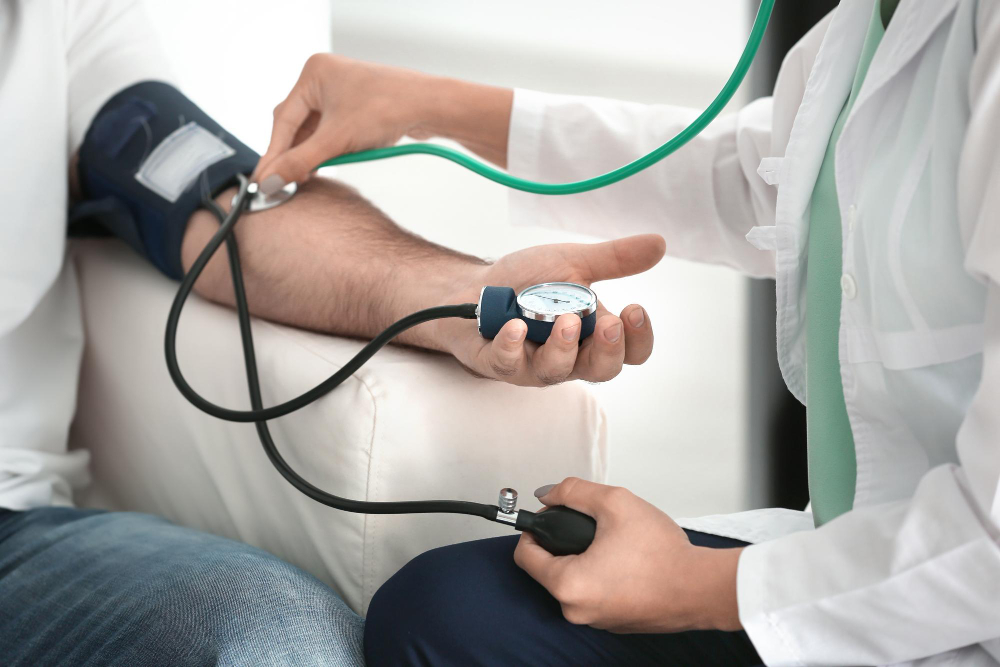
During measurement, proper positioning matters. Your back should be supported, your feet should rest flat on the floor, and your arm should be positioned approximately at heart level.
The blood pressure cuff should also fit correctly.
If the next measurement remains elevated, the provider may discuss additional monitoring or medical follow-up.
Patients looking for a walk-in clinic near New Hyde Park can enquire about NYUCC's available medical examinations and assessments.
What Happens if Your Blood Pressure Remains High?
The next step depends on your readings, symptoms, medical history and other risk factors.
For example, someone with a mildly elevated reading and no concerning symptoms may be advised to monitor blood pressure at home.
Another patient with consistently high readings, diabetes, kidney disease or cardiovascular risk factors may require further evaluation.
A healthcare provider might recommend lifestyle changes, additional tests, medication or follow-up with a primary care clinician.
These recommendations are individualised. A blood pressure reading alone does not determine which treatment is appropriate.
Patients seeking urgent care near Queens Village can contact NYUCC about available non-emergency medical evaluations.
You can also explore the clinic's physical exam services for more information.
Should You Check Your Blood Pressure at Home After a Physical Exam?
Home monitoring can help healthcare professionals understand how your blood pressure changes outside the clinical setting.
If home monitoring is recommended, consider using a validated upper-arm blood pressure device with the correct cuff size.
Follow the measurement instructions provided by your clinician and record your readings with the date and time.
Your provider may ask you to take readings at specific times over several days.
Share the record during your follow-up appointment.
Remember that home monitoring does not replace medical care. Avoid starting, stopping or adjusting prescribed medication based only on home readings without speaking to your healthcare professional.
Can High Blood Pressure Require Additional Testing?
Sometimes.
When repeated readings suggest hypertension, a clinician may recommend tests to assess your general health and identify possible complications or contributing factors.
Depending on the situation, these could include:
- Blood tests to assess kidney function and electrolytes.
- Blood glucose or cholesterol testing.
- Urine tests when clinically indicated.
- An electrocardiogram (ECG) in selected cases.
Not every patient requires every test. The healthcare provider determines which investigations are appropriate based on examination findings and individual risk factors.
For residents seeking urgent care near Floral Park, NYUCC provides access to appropriate walk-in medical evaluations.
The clinic also offers diagnostic services that may support certain medical assessments.
When Should High Blood Pressure Be Treated as an Emergency?
High blood pressure often causes no noticeable symptoms, even when it is significantly elevated.
However, very high readings require prompt attention.
If your blood pressure is above 180 systolic and/or 120 diastolic, the American Heart Association recommends repeating the measurement after at least one minute.
If the reading remains severely elevated, contact a healthcare professional promptly, even without symptoms.
If a severely elevated reading is accompanied by chest pain, difficulty breathing, sudden weakness, vision changes or difficulty speaking, call 911 immediately.
These symptoms may indicate a medical emergency. Do not delay emergency care to visit an urgent care clinic.
Where Can You Get a Physical Exam or Follow-Up Medical Evaluation Near You?
An unexpectedly high blood pressure reading may require another measurement, home monitoring or additional medical evaluation.
New York Urgent Care Center provides walk-in medical services from its Bellerose clinic for patients across several nearby communities.
Residents looking for urgent care near New Hyde Park can enquire about appropriate non-emergency evaluations, including available physical examination services.
Patients searching for a walk-in clinic near Garden City can also contact NYUCC regarding medical assessments without routinely needing an appointment.
For people seeking a walk-in clinic near Floral Park, NYUCC offers appropriate medical services and physical examinations.
Similarly, patients looking for urgent care near Queens Village can enquire about medical evaluations following an unexpected physical exam result.
If your blood pressure has been consistently elevated, following up with your regular healthcare provider remains important for ongoing monitoring and management.
Frequently Asked Questions
1. Is 140/90 considered high during a physical exam?
Yes. A reading of 140 systolic or 90 diastolic falls within the Stage 2 hypertension category under American Heart Association guidelines. However, one reading alone does not necessarily establish a diagnosis.
2. Can anxiety cause an elevated blood pressure reading?
Yes. Anxiety in medical settings can temporarily increase blood pressure. However, repeated monitoring may be needed to determine whether the elevation is limited to clinical visits.
3. Should I worry if my blood pressure was high but I feel fine?
High blood pressure frequently causes no symptoms. An elevated reading should not be ignored simply because you feel well. Follow your healthcare provider's recommendations for monitoring and evaluation.
4. Will I need blood tests after an elevated blood pressure reading?
Not always. A clinician may recommend laboratory tests depending on your blood pressure history, other medical conditions and examination findings.
5. Can I visit NYUCC for a physical exam without an appointment?
NYUCC offers walk-in medical services. Patients from New Hyde Park, Garden City, Floral Park and Queens Village can contact the clinic to enquire about available physical examination services.
Take the Next Step After an Unexpected Physical Exam Result
An unexpected blood pressure reading can raise questions, but understanding the result is the first step toward appropriate care.
If your physical exam revealed elevated blood pressure, follow the examiner's advice and arrange any recommended monitoring or medical evaluation.
New York Urgent Care Center provides walk-in medical services for patients from New Hyde Park, Garden City, Floral Park, Queens Village and surrounding communities.
Clinic Address: 251-05 Jericho Turnpike, Bellerose, NY 11426
Call: (718) 962-2273
Learn more about NYUCC's physical examination services or contact the clinic for additional information.
